Saturday, November 25, 2006

The Role of a Prophet


Exactly what did the ancient prophets do?

Let us enumerate:

  1. They foretold the future. What for? To prepare people to face it or to prevent them from becoming victims of its eventualities.
  2. They told the truth. The future held certain principles or realities either present or not present today. To be aware of them is to gain a moral advantage over those who remain ignorant or do not submit to heaven’s calling.
  3. They established the past. The past contained the same principles applicable today which if we remain in them will help us face trials.
  4. They linked the past with the present and with the future into one practical reality. This synthesis once appreciated allows people to see their condition with a clearer and wider perspective and thus prevent failure or minimize suffering. In short, prophets saved people.
  5. They suffered for the people. Consider Lot who was a righteous person living among depraved people. All that time he was tortured by the sins of those people. Although not a recognized prophet, he showed how people like Elijah or Daniel might have felt living among the wicked.
  6. They suffered for themselves. To be different and to live according to a high standard of morality entails discipline and much self-denial. A prophet (or any truly committed believer, for that matter) willfully decides to accept divine chastisement for no other reason than that it is the proper thing to do.
  7. They suffered for God. Like Jesus Who took upon Himself the curses of God’s enemies, prophets ultimately knew that God was the One behind all that they went through and humbly submitted to His will.
  8. They lived very challenging and extraordinary lives. The burden of declaring things not normal to common people required almost superhuman skills and commitment. Only a few were gifted to be able to successfully bear it.
  9. They lived and died with great spiritual contentment. The satisfaction of anticipating the prized words “Well done, good and faithful servant” motivated them to do what they were told to do.
  10. They live forever. No other reward for such arduous task as that of being a prophet other than eternal life will suffice. As trailblazers, prophets showed and led the way to life.

(Photo above shows solarized UP Baguio Oblation against a natural blue sky.)

Sunday, November 19, 2006

Are We All Maladjusted People?


Mark 6:47-50

When evening came, the boat was in the middle of the lake, and he was alone on land. He saw the disciples straining at the oars, because the wind was against them. About the fourth watch of the night he went out to them, walking on the lake. He was about to pass by them, but when they saw him walking on the lake, they thought he was a ghost. They cried out, because they all saw him and were terrified.


Even in terrible times, God can still play a joke on us. Huh? Why should anyone claiming to be godly say such a thing?

But it’s true. If testing our faith or merely our perception of reality could be considered a joke.

Look at that phrase in Verse 48 in this short event in the life of Jesus and the Apostles: He was about to pass by them…. Seeing how they struggled against the storm and walking (probably strolling confidently) ON the water, Jesus was even intending to pass by them. Why?

He certainly did not want to insult them by waving or shouting at them. Neither did He try to come up suddenly on the boat and shock them witless. That would have probably caused some of them to suffer a heart attack. Jesus did the best and most decent thing under the situation: try to walk ahead of them. That is, to see if they would notice Him.

They did.

But they thought He was a ghost! Who else would walk on water (during a storm) but a ghost? Belief in ghosts or superstitions beats faith. Almost everytime. Historically and culturally.

Wait, they recognized Jesus finally. And they were even more scared; they screamed in terror! God must have been laughing at this scene. (Those who understand may now laugh at themselves, too.) His Son toying around with the inconsistencies of untrained disciples. It’s like watching your 10-year-old child having fun with a tiny, bumbling puppy.

Who can adjust to the reality of Jesus without going crazy? Or rejecting Him? By that, I mean the reality of His unreality. That He can walk on water or that He can stop the wind. And, need I mention, raise the dead?

We all are well adjusted to nature and its seemingly fixed laws but not to God and His creative ways – some still call it mysterious after centuries of revelation.

Oh, when will we ever adjust our eyes and our minds to the reality of God?


(Photo on top: Fresh footprint on the sand -- ordinary fisherfolk have no need to wear shoes while they work; Photo above: Fishermen of San Juan, La Union pulling a net from the shore. Safe method for humans but perhaps not so for sea life being crushed and dragged along.

Sunday, November 12, 2006

It's a World Wild Web

They are able to have a more stable social structure that prevents them from being aggressive….” The American woman’s sound-byte on TV partly caught my attention as I coaxed water from the fountain in the public dining hall. Ah, US elections: even in the Philippines, or especially in the Philippines, people are interested to know what issues the Democrats and the Republicans talk about. I thought, “Why should we be so concerned about social or political issues in the US when we choke from those of our own here?” The dilemma tossed in my mind as the glass filled up. Looking up at the TV screen, I then saw this gigantic elephant and its tiny baby enveloped in the swirling African savannah dust. Elephants on Discovery Channel! They were talking about elephants and not Americans! Not even Republicans!

Is it possible that people have reached that point in human development that we have somehow applied our own social dynamics to those of animals? Or is it merely an evolutionary extension (pun definitely intended) of our dependence or adherence (following Darwin’s thinking) to our origins in the lower life-forms? That what we are simply could not be detached from what we were before when we were supposedly eons away from even contemplating such complex ideas as elections or electronics, things which are even beyond ordinary human, let alone animal, comprehension.


Or perhaps, we condescendingly try to force upon animals a logical pattern of behavior akin to that of humans. I don’t really know for sure how zoologists think but in recent times, the various academic disciplines have crossed barriers in the effort to attain a more holistic view of life.


The socio-biologists, for instance, claim that humans are biological organisms. Others argue that “No, at the beginning of the day, we are an evolving animal species, but by the end of the day, we're something else again. We're human beings…. (T)he Yanomami Indians of South America is one more instance of that fierce philosophical fight over the nature of human nature. Are those head-hunting Yanomami warriors acting out a universal human urge to dominate or die? And are we doomed, if that's so, to tribalism, sexism, racism, ethnic cleansing and war without end?” <Christopher Lydon at www.wbur.org>

Perhaps some people study animals or prefer dealing with them as pets or as virtual friends to better understand themselves. I have a friend who, before she married a bit late in her life, had so many pet cats and after marrying even adopted stray cats. Sure, animals need care as much as humans or husbands do. They need, like humans too, understanding and to be understood in emotional, social and scientific terms. (Or do we merely reflect ourselves upon them? Seeing something that’s not really there?) How much effort one puts into such a pursuit depends on one’s passion for it. And how much we gain from it determines the level of happiness we attain in life.

In a sense, the world has become less and less of a wild, unexplored and untamed world. Even society has become less and less exciting and less useful for so many people who have gone on to explore other worlds such as the virtual realm of the Internet and that of outer space. (Still for so many, TV remains the window to a visually-managed wilderness whose ways seem to awaken our own primal instincts.) Whereas before people went to Africa or the Amazon River to hunt wild game or explore nature, today the excitement dwells in the inner reaches of the human psyche or the human mind. In this still uncompleted chart, many spend money, time and effort to unravel the secrets that may one day bring the Utopian era of harmony, peace and understanding. But is that really possible on this Earth?

For now, we study animals and ourselves, propose hypotheses and theories, seek out social and political leaders and scour books and the Internet in search of conclusive answers. In search of the perfect knowledge that will set us finally free from the wildness within and around us. All because we have lost that perfect affinity we once had with one another and even with animals in a long lost place we call Paradise.


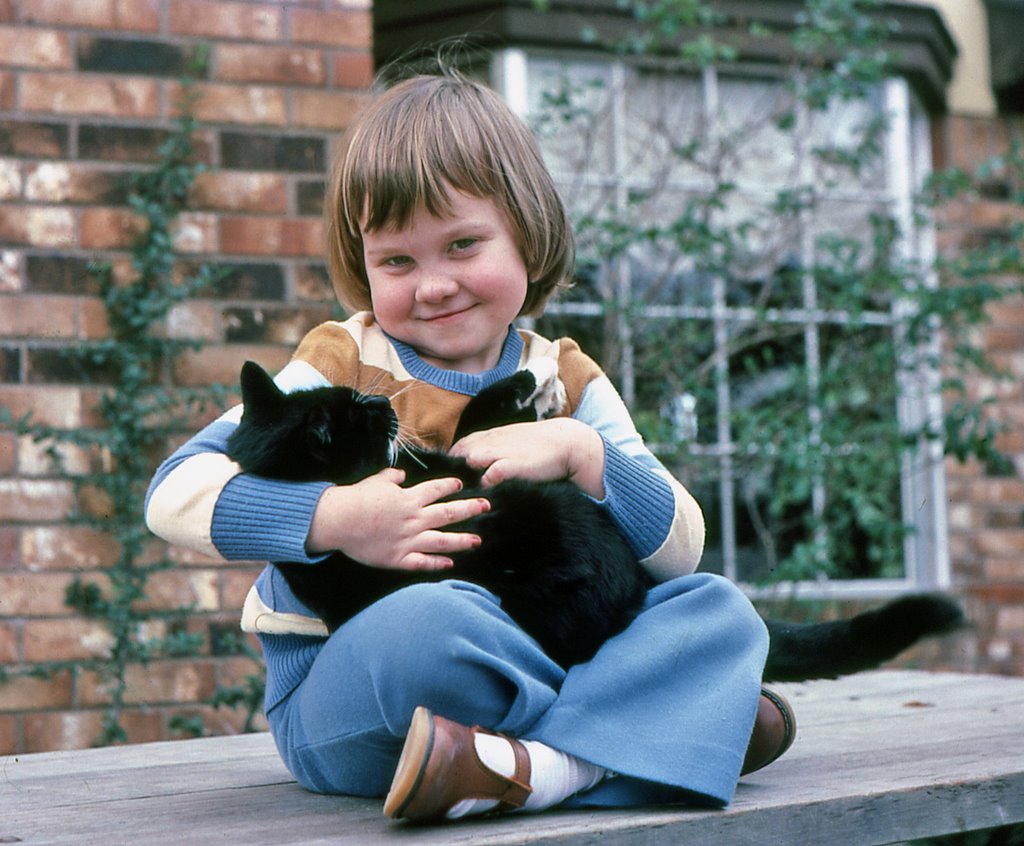
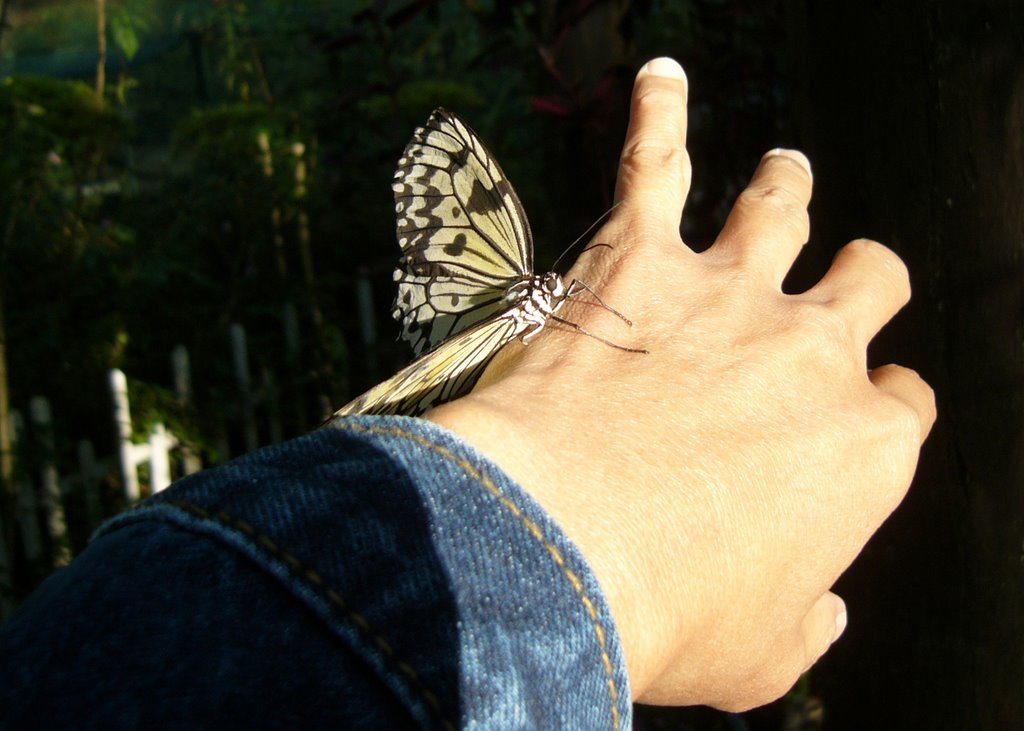
[Top photo: My foster-sister, Jodi Hottel, at 4 and her pet cat, Blackie (from a Kodachrome slide taken in 1980, Texas); Photo above: At the butterfly farm in Club John Hay, Baguio City]

Wednesday, November 01, 2006

The History of Unbelief


Why are there atheists? Or for that matter, why are there believers? Let’s apply Socrates. (In my meditation, I asked these same questions and was led to further questions that gave some suitable answers.)

Yes, why would a person reject evidence of God’s existence? Why would that person say, for instance, that God does not exist because you cannot prove something that does not exist? But that is getting ahead of our selves. Presented with the proposition that God Whom we cannot see (not necessarily that He does not exist) does exist might be difficult for some people but easy for others? Why?

We think according to how we were taught to think. We make judgments or evaluations according to how we learned to reason out. If we lived in a culture or an environment wherein the emphasis is on science or logic and not on suppositions, naturally we will use these astute methods to draw conclusions. However, if you ever grew up in a family that fed you with superstitions, you will learn to fear the dark and constantly beware of creatures lurking around you. Things you do not see will make you act as if they were real and vicious enough to do damage. On the other hand, those who believe in the benevolent presence of guardian angels feel safe and in ample grace. Some of the most respected people we know bear some weird ideas or taboos that defy objective reason. Efren “Bata” Reyes, for instance, does not take a bath during his billiard tournaments for good luck.

Which makes us wonder: Were we meant to be creatures of accidents or chance or of purpose? If we came out of pure chance, is goodness or excellence something we can choose and enjoy as we please or something we can merely disregard and still live merrily on?

It seems then that how we were brought up or educated has so much to do with the way we perceive ourselves and the world we live in. It further determines our appreciation (or lack of it) of things we refer to as out-of-this-world, things we do not see and hear.

Take this case: Will a blind man believe there is such a thing as a vivid rainbow? Not unless someone told him so. How would you describe colors to such a blind man? How do you tell him that what you see is a mere illusion itself of raindrops playing around with the light to make out a dazzling display of hues? Whatever tools you may use, you might end up convincing the man. You are a valid and direct witness to the reality of a rainbow.

Was the writer of the Genesis account a valid witness of creation, of God and everything he wrote about? If he was, then we can believe his words. We can believe there is a God. We can then go directly to the source of the testimony about God. We bypass those testimonies of our teachers, our parents, of all of human history pointing to the existence of God and His many interventions in our affairs to make our task easier. However, we tend to believe only what we were told or taught to believe. This in itself is an acquired habit but a dangerous one. For with all the evidences available, we can just as well believe primary or first-hand witnesses.

In some cases, of course, people form their beliefs from what they see in nature. The pagans worshipped nature or the Spirit that moves in nature as they saw power at work and beauty displayed. Only a truly blinded person will see creation and not see the Hand behind it. The “savage” may not clearly perceive the nature of Deity but he or she goes through rituals that express that sublime acknowledgment of divine existence. Atheists, on the other hand, do not, as a rule, make as much as a nod to any supernatural being. It is a case of a human spirit denying and rejecting its own existence before and beyond the present. Why so?

“Lack” of evidence does not necessarily mean the “absence” of evidence. Oftentimes, it means the evidence is recognized (obviously, for atheists are mostly intelligent people who have read a lot) but not accepted as valid or real evidence. At most, the proof is taken as “unscientific” or “illogical”. A thing that does not exist cannot be proved. Granted that that is so, let us then apply this statement upon the atheist’s own existence.

We know and accept that the atheist – let’s call him Joe Flash -- exists. We see Joe and hear him and can even touch him. We can converse with him. Does he have a body? Obviously, he does. Does he have a spirit? We think he does. But does he accept that he does? If he does, then good. But does he believe that his spirit will survive his body? If not, then that is one opinion. If he does, then he has destroyed his position as an atheist. For an immortal spirit would mean that it came -- as it really did – from somewhere else, perhaps from God.

Hence, if the human spirit disappears with the body, where did that spirit come from in the first place? From matter? Obviously not, because we were born not of mere matter but of living beings. We are not animals either so we cannot compare ourselves with animals. Besides, the so-called history of evolution is just another form of atheism or at best a theory wearing the convenient clothes of faith. The main point, however, is the question of where human and animal spirits originated. Birds can be trained to talk but not to think. The human spirit has that advantage of sentience. We know because we were meant to know things. Why? Because we are beings with a purpose, not products of chance. The main purpose for plants and animals is to help humans survive. Our main purpose as humans is to find out why we need to survive and why we do survive.

Nevertheless, there are things which, even if we could, we will not know because we do not want to know. A monkey, if it could, would want to know how to make a crunchy pie out of banana or coconut. But humans can make all kinds of recipes out of anything under the leaves of plants and skins of animals. Why? The spirit in us is an image of the One who created us. We see ourselves or we see creation, and we see the reflection of Divinity. To some it is obvious; to others it is not. Why? Because of what we know and how we were taught to know. If atheists only knew what they are capable of knowing, they would believe, too. Alas, for lack of desire, they cannot see the evidences of God’s reality.

In the beginning, Adam and Eve didn’t have to look for evidence. God spoke to them face to face in the Garden. We might exclaim, “Good for them!” But who wrote about Adam and Eve? It was Moses. Did he speak to God? He claimed he did. How do we know he really did? He had tablets of stone to prove that God even wrote the Ten Commandments He gave to the Hebrews. Come on, a guy raised in Egypt where sculpting with metal tools was common could have easily written on stone! Right. What about the light that glowed in his face after he talked to God? People did see him, didn’t they? How sure are we? Well, how sure are we that Hitler commanded the Jews to be gassed? Because somebody saw it and wrote about it. How sure are we that Moses parted the sea? Because somebody saw it and wrote about it.

Where lies the difference? Not in the testimony but in the one who receives the testimony. Testimony is recorded history. Whether written or spoken or seen with our own eyes or heard with our own ears, evidence is always based on human experience or history. Whether direct or not, it will always require belief or faith. If a person is raised to believe in ghosts, he or she will grow to be a ghost-believer. Until such time that he changes his/her mind to believe otherwise.

In the beginning, all people believed in God. At some point in time, people forgot that God exists. Why? Because they forgot (this must be possible) or someone told them there is no God. This statement is most intriguing and deserves our attention.

How do people forget something? When their attention shifts to another thing. I forget to bring my keys because I was busy cleaning my shoes. Or I forget to turn off the light because someone called me on the phone. Can a person forget God? The Pharaohs who came after Joseph’s time forgot that he ever existed or that he saved Egypt from starvation. How was this possible? Did they not erect a memorial for Joseph? Did they not put into their records his deeds? Or if they did, did they pull the memorial down or burned the records? Perhaps, by accident, Joseph was forgotten. Can we accidentally forget God? It is possible. If we try hard enough, we can probably find people who did.

But what about the idea of telling people that there is no God? Is this possible? What would motivate a person do so? If someone else said there is a God. Yes, someone who has forgotten or does not believe in God simply responds to the question: Is there a God? In short, one person is led to atheism as much as another is led to belief. The answer depends on how we think out the conclusion.

In the end, forgetting is a temporary thing. So is believing. Today, one may believe in God and may not after a while. Or one may remain an atheist or a believer until death. In the process, others may be influenced to believe our testimony or not.

This brings us finally to the very root of the history of unbelief. At one time, some Greeks acknowledged an Unknown God. For centuries, the Greeks, without a revealed scripture, concluded that a God exists and honored Him accordingly. The ancient pagans also acknowledged a Divine Presence in nature or adored the many gods of their ancestors. The great liar, Satan, who could not prevent people from believing, sought to confuse the issue by inventing idolatry. When finally he thought of a way to make people not believe in God, he grasped the opportunity, using science and philosophy to make a strong case. With his success at weakening Christianity through greed, divisions and wars, he further strengthened his success at bringing more and more people away from God. Today, some nations legislate against belief in God, against praying in public places and against carrying and reading the Bible. If there is really no God, why the paranoia? Why the repression? Is this an overreaction to the hegemony of the Crusaders or the excesses of modern faith? Or is this merely an expression of the insecurity of atheism?

The greatest lie in the world comes from the greatest liar of all, Satan: There is no God. When Jesus called the Jews “children of Satan”, He was simply calling them liars. Why? Because they did not believe the testimonies of His words and His miracles. Christ came to bear witness to the truth but humans rejected it. Can we now appreciate how powerful unbelief can be? Why? Because this world is ruled by Satan and so the children of God suffer as they did in ancient times. As it is, their testimony of God is overwhelmed by the onslaught of so much unbelief around us. The Book of Revelation had predicted this. Even the early assemblies of Christians came under intense attack from God’s enemies. Faith is under attack and yet it thrives because it has the power to save those who truly seek light and salvation. This spiritual battle may seem subdued or quiet to many but it is a real battle and the intense engagement rages on. Atheism is just one of the many protagonists.

Like it or not, we do not make perfectly independent conclusions in our beliefs. We will always be subjected to the opinions and beliefs of others. Our parents’ upbringing of us, our teachers’ guidance in school and the world’s influence on us will color our thoughts and ideas. And everything else passed on to us may contain the lies invented from the beginning of history when the serpent deceived our first parents. But we can counteract the effects of other people’s stained minds by going directly to the testimonies of those who talked to God or to whom God spoke. This is the only sure way.

Granted that God does not exist in this world or, put in another perspective, if God is beyond human scrutiny; how does one try to prove He exists? Is it really our problem? No! It is God’s problem. To take that as our problem would only make us appear very proud. That’s what atheists do. Instead of assuming something does not exist, why not ask: What if it exists? Isn’t it better to have an open mind and say: Alright, if I were God, what would I do? Will I keep myself hidden from people who think I don’t exist? Will I not do something to try to show them that I do exist? But an atheist may not even care to ask such questions and simply say, “There is nothing to prove for a person who needs no proof.” (Something a believer may also say.) Pride is the greatest obstacle to learning.

Ultimately, unbelief is as much a choice as belief is. Every believer faces a wall when confronted with another person’s unbelief for it is literally and figuratively a dead-end. A deep emptiness besets a believer upon acknowledging that some people do not believe what he believes so earnestly. He even wonders how atheists must feel about people who believe in God. Do atheists feel the same pity or regret? Perhaps. For we take only what we see and act thereon. We feel only what we feel is natural or normal for finite humans to do. Whether we believe or not, we will still be frail creatures on this planet. For now, we all share the same world and experience the same things humans go through in the body. For now, we can only await the final resolution of things.

Why are there atheists? Why are there believers? I don’t think it is because there is no God.

There are no shadows in the sun,
As there is no darkness in heaven;
There are no winds above the clouds
As there is no doubt in a true believer’s heart;
There is no death where there is no sin,
As there is no sorrow in eternal life.
Darkness, doubt and death
Are the fruits of unbelief.

Light, love and everlasting life
Come from belief in God.

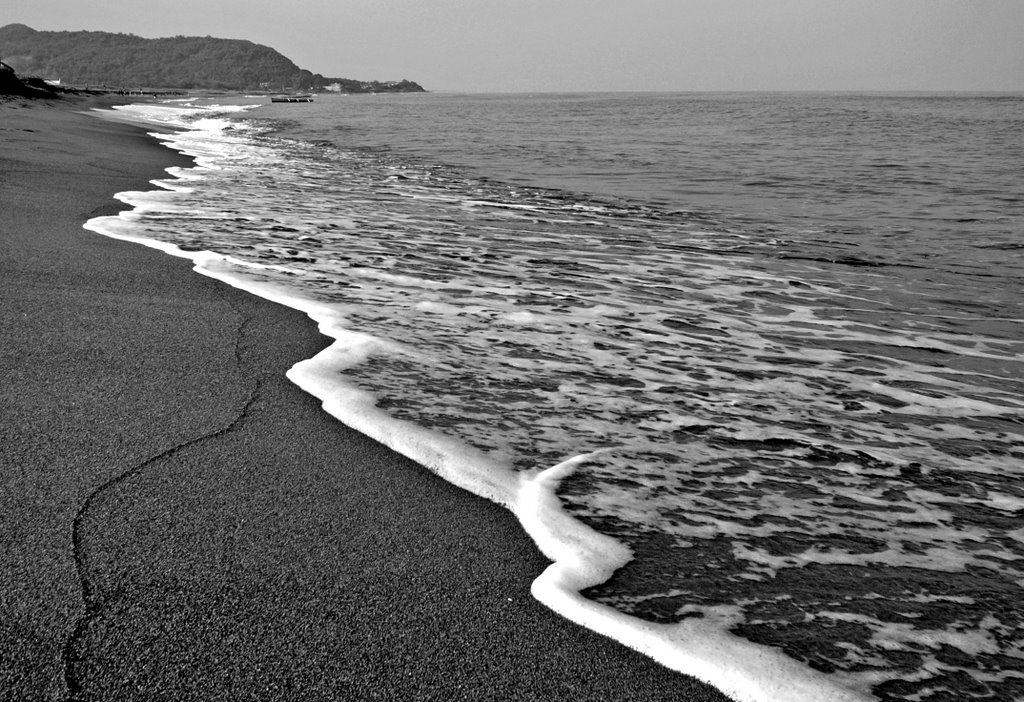
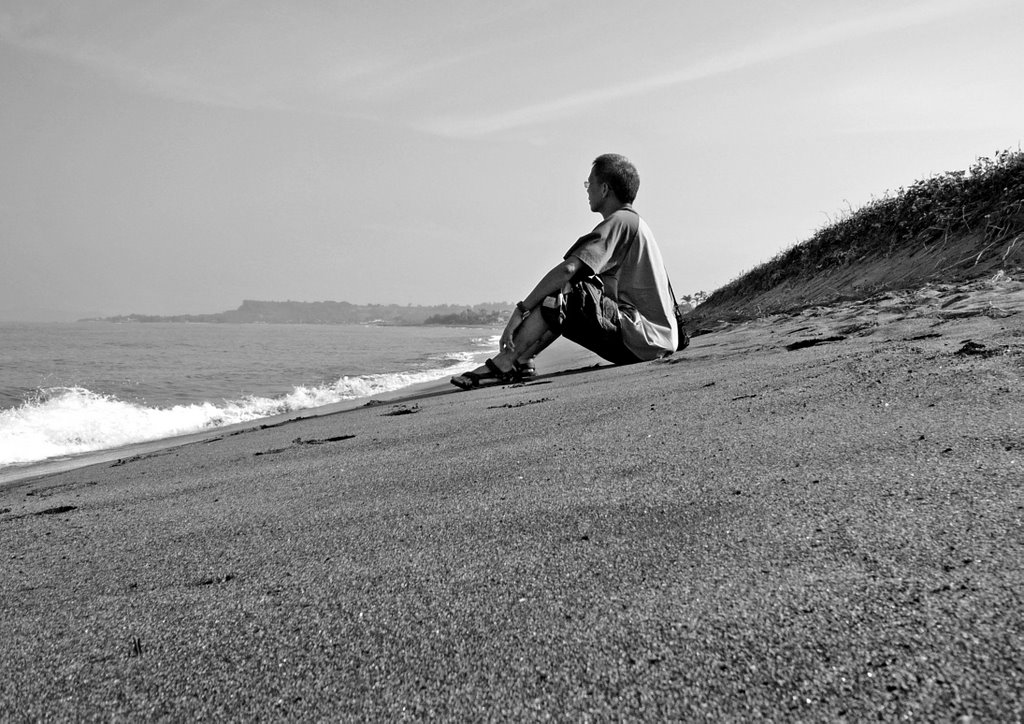
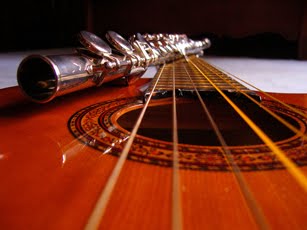
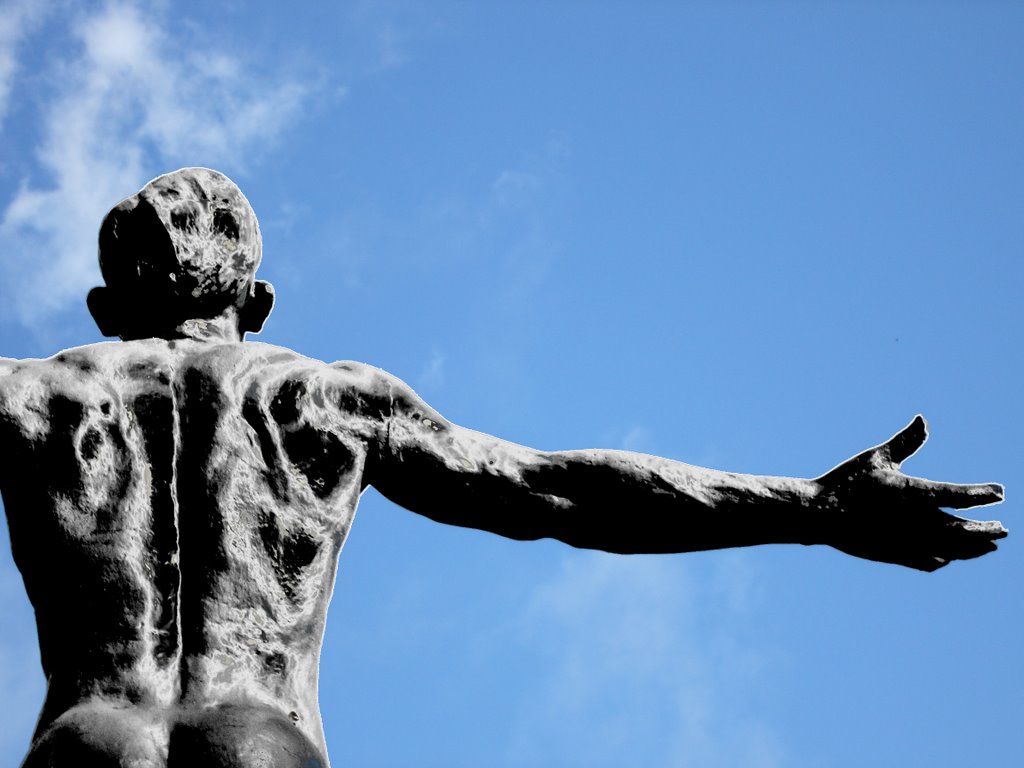
(Photo on top: Morning surf in San Juan, La Union. Photo above: Clear day on the beach when sand, sea, sky, sun and soul unite.)
Friday, October 27, 2006

Testing the Limits

Engineering science gave us skyscrapers, suspension bridges, nuclear submarines and supersonic planes. Imagine how much humans have accomplished since the time of the Noah’s Ark, Babel Tower and the Egyptian Pharaohs’ Pyramids. Endowed with plain human curiosity and advancing through sophisticated technology, we have learned to harness the use of materials and the forces of nature to create durable structures.

Until concrete and steel became common tools for builders, we had not truly understood how to respond to forces such as gravity, earthquakes, cyclonic winds and water pressure. With a combined steel-and-concrete design, civil engineers have been able to maximize strength and space through economical construction designs and methods. A building can now go up to more than 400 meters using steel or reinforced concrete frames. This beneficial use of material strength applies to many other fields we often take for granted: in dental care, in furniture design, in toy manufacturing and in the design of sporting goods.

Testing the limits of a particular material such as lumber can be as simple as bending it with one’s hands until it breaks or using precise gadgets that will measure how much flexural or bending stress it can withstand before reaching its Ultimate Strength limit. Such know-how allows engineers to design structures that contain all the benefits of economy, aesthetics, strength and durability. In short, engineers determine the allowable limits and work within them. To exceed them is to court disaster.

In sports, testing the limits has allowed athletes to endure stress and overcome great obstacles on the road to breaking Olympic records. Extreme sports – as an exciting new field -- is all about breaking through perceived human limits of endurance, courage and credulity. Certainly, it has become a great source of profit for the networks and of compelling entertainment for people. However, it has also stretched human sensitivity to a point of fatigue itself – a kind of Ultimate Strength limit. In fact, engineers use the term “fatigue” to refer to the failure of a structural member to carry load, thus leading to collapse.

Nervous breakdown is a common occurrence now, perhaps because we subject ourselves to so much stress physically, emotionally as well as mentally. And even kids have been mercilessly utilized by the networks to act like mature newscasters, comedians, entertainers and program hosts as if their presence could give a semblance of innocence and freshness to otherwise unwholesome and hackneyed shows. As if that were not enough, business rears its ugly head and bankrolls shows and activities that all but defy all limits of decency, virtue and common sense. We need to promote a new line of underwear. Bring in the best-looking hunks and babes and let them wear the skimpiest undies. As a finale, let them take them off. Watch how the crowd will howl with glee!

There is really no limit to human depravity. Testing the limits is the oldest but the most enduring game in town.

The Tower of Babel was nothing but a story of how city-people tested the limits of human ingenuity and ended up testing the grace of God Himself. They simply wanted to build a tower to reach heaven, a totally innocent goal if you look at it. But in their hearts, those people harbored the chronic sin of pride. In God’s words, “If as one people speaking the same language they have begun to do this, then nothing they plan to do will be impossible for them." (Genesis 11:6) In Job 38:10-11, we read how God “fixed limits” for the sea and “set its doors and bars in place” and said, “This far you may come and no farther; here is where your proud waves halt.”

Only up to this point!

In same manner, God had set a limit to humans. As early as the time of Adam and Eve, this became obvious. Everything else was allowed, except for the forbidden fruit. I grant you a million choices but one singular prohibition. I give you one million things but do not choose something else that will destroy you. Sounds fair enough, isn’t it?

But, no! As adventurous or foolhardy as humans are, they end up testing even the limits of God's moral standards. Monogamy was once the originally prescribed limit but polygamy broke through. Marital fidelity used to be the rule until adultery and divorce came into fashion. Laws – whether divine or human – were precisely conceived to set limits to human behavior and yet now there is no end to the promulgation of laws as there is really no end to human ingenuity to impugn the rule of law. Sophisticated security measures and financial controls against embezzlement, fraud, bank robbery and corruption have become standard jobs for monetary institutions. Even the simple task of securing one’s domicile against break-ins has spawned a big business for security agencies and high-tech security-alarm manufacturers.

Complete peace and security has become a wistful dream today, thanks to unlimited or unabated criminality and violence. In a much larger scale, military adventurism has become a fashionable career move for our officers in uniform. Lured by the promises of businesspeople and politicians, some of these officers become easy prey for people who wantonly test the limits of democracy. Add to this deadly, armed component those who stretch the limits of our so-called freedom of speech and assembly and we have the formula for bringing a nation to the brink of collapse. Like a building that has structural members with limited capacities, so with a nation where peace and order can break down under abnormal and intolerable conditions. Hence, the danger of anarchy will always remain as long as there are those who resort to nefarious ways to test the limits of our institutions.

When will it all end? How do we arrest the ultimate downfall of order in society?

Simply by living within the limits of society’s norms. As Aristotle and Confucius said, “Walk the middle path.” Yes, do not go to the extreme left or right. Do not go to the extreme height or the extreme depth. Stay within the liberties given to us by God and society and we will do well. There is so much we can do and enjoy in that space “within the bounds” without feeling bored or confined. Without feeling that life is unjust or unkind.

Only the abnormal or the eccentric feel compelled to cross the lines to unnatural behavior. Were you born a male? Then, behave like one. Who said it’s all genetic? “God made them male and female.” How can He make a mistake? Homosexuality is merely another convenient way to test and break the limits. Sodom and Gomorrah -- just like Babel -- were heaven’s judgment calls against going to the extremes. A fair warning we should heed for our own good.

But we cannot stop people from testing and breaking the limits. They believe they have unlimited rights and freedoms. We can only expect society to strengthen the institutions that will help people gain control over their inordinate passions before they totally destroy themselves and others. Prisons were designed to do that but, as it is, more people who should be in them are out there wreaking havoc. Government was designed to promote law and order but at times the people in government themselves violate the law and create discontent. Churches were meant to provide us with spiritual guidance but oftentimes the behaviors of pastors and bishops repulse us.

Going back to what is essentially required of each individual must be given emphasis in homes and schools. Wonder why we see societal breakdown? Because we no longer teach “Good Manners and Right Conduct”. If kids today do not know how to throw trash properly, it comes from a simple lack of basic training. Eventually it grows to become a case of disrespect for authority. We, in general, have become too soft in disciplining children. They have learned early on that if they can cross the limits, they soon gain confidence to do things we used to abhor ourselves but dare not forbid them for fear of their rebellion. The neglect escalates until we reap the whirlwind.

Women now drink beer and wine as openly as men. Not that they don’t have the equal right, if that is what you think this criticism is all about. But it’s not that; it’s about men having broken through the limits first a long time ago and then being followed by women now in full force. Baby come lately! Everybody’s doing it now for sure. Good for business and everyone. Let’s drink to that! Everybody’s welcome to the party!

With parents steeped in “extreme” tendencies or “deficient” morals, can the children be far behind? We now reap the fruits of this overweening culture of deviant and inordinate human behavior. Notice how bored kids are nowadays? They used to be so playful and slept when they got tired of running around. But now they never get tired of sitting down and playing PC games. So what? What’s the difference? Playing outside made them strong and normal. Their bodies told them to rest when they needed to. Playing PC games makes them physically weak, socially inept and emotionally dull. They don’t even know the meaning of tiredness or hunger once they sit to play. (Their parents have to tell them so!) They no longer interact with people or with themselves but with a machine. They no longer see the world but a fictitious realm. They have broken through the mist of unlimited imagination and away from the real world. Caveat: The mind never gets tired; it only goes insane.

But don’t take my word for it. Look closely at your own children, nephews and nieces. Or better still, find out for yourself what they are going through. Only then will you find out for yourself what kinds of adults they will become.

Do they – or we, for that matter -- live within the limits or are they/we constantly testing the limits? The answers are there right before our eyes.


Tuesday, October 24, 2006

Out in Space, Out of Place

(I Dreamed that Google Said “Godspeed to Atlantis!”)

For those who think browsing the Internet has become one boring past-time, consider this: It now allows you to monitor space exploration in real-time via NASA TV. (Visit www.tvunetworks.com and download the TV player to access it and other channels for free.)

As a kid, I remember the excitement of listening to the transistor radio – an amazing portable and personal portal to global programs and music. Today, the PC has become a virtual, personal window with a much wider and higher scope. The landscape, no, the land-sea-space-scape (whichever direction the camera points) is breathtaking. You swing silently around the globe inside the space-shuttle Atlantis hundreds of kilometers above the Earth, dwell with astronauts inside the gravity-free International Space-Station and lose all earthly sense of burdensome concerns as you float along. Unlike birds who must feel the rush of the wind or the sting of the cold wind on there faces, you fly in total security and comfort. Everything moves in slow-mo. This is the ultimate stress-free environment! It’s so hypnotic you wish you could just enjoy the ride all day long. But then Houston and its horde of scientists crackle in the speakers and put you in your place. It is after all just reality TV plus a lot of science.

The virtual experience, however, can be surreal. Up there, the world visually becomes smaller and smaller. And awkwardly out of place. And why not? If flying were all that liberating and exciting, why go back to Earth and be again limited or finite? Why suffer if you can have joy beyond imagination. Yet, the induced dream is fleeting. Afterward, you find your butt numb from all that sitting motionless (except for your agile mouse-friendly finger) before the PC.

And if that did not give you enough divine-prerogatives or powers to literally control what to see and where to go, there is GoogleEarth (www.GoogleEarth.com) to give you exactly that. Whereas NASA only shows you misty views of Africa or the silver-lined, blue atmosphere that cloaks the Earth, GoogleEarth lets you hover to a hundred meters above the tip of the Eiffel Tower in Paris and clearly see people and their shadows as if they were lifeless, immobile ants. Move the mouse and the monitor takes you across the Atlantic as you fly over the Statue of Liberty and down to Washington DC, where you see US government buildings masked in 3D graphics to hide structural details. What for? Who knows? Even before they put out those maps, the terrorists already knew where and how to land those deadly suicide planes. Besides, all you need are the coordinates to target any place you want on the map.

This awesome power to conjure for our minds once improbable acts could be the newest level in human achievement that will either bring us to glorious heights or to ignominious depths. For how can such contrasting ideas as boundless freedom and global destruction emanate from these two parallel activities which auspiciously remind us of those innocent games we did on the globe as kids? We would never have dared throw a dart on the library globe or map or felt ecstatic being able to see where we were located on the map. Abstraction (such is a map) did not really help our imagination that much as kids. But the Internet has given imagination a giant leap. No, it seems it has provided us with an almost divine ability to see the world as God sees it. And as with all good things put to bad use, also the unnerving capacity to encroach or impose ourselves upon the lives of others.

Today, we no longer consider the world as the infinitely inscrutable environment that ancient peoples used to do. We no longer fear the terrifying forces that appeared to bring diverse judgments upon human civilizations – the floods, the storms, the plagues and the cataclysms. We no longer worry about what we will be and what we are able to accomplish for ourselves. Superstition has given way to super-VISION. We know more and we can see farther than ever before. In short, we have become like God. For better of for worse, we have removed – if not totally and effectively, at least conceivably and potentially -- the limits to what we can do. Alas, like the people of Babel, nothing can stop us from reaching higher and higher! So it seems.

As so, like God Who dwells not on the Earth, we no longer feel really at home in this world. It has become out of place. Obsolete. Used up. We have gradually put ourselves out of it. Someday, too, it may no longer support human life. Not knowing fully what is out there, we leave the Earth not knowing fully what is here. Or why we were put here in the first place.

The old nightmares we had of looking down the world and flying farther and farther from it brought cold sweat to our brows and woke us up terrified. But with technology and the accompanying freedom brought to our imaginations, we merely turn around and face other worlds never before conquered. We have jettisoned our fears and ignorance and directed our spaceship to the much, much wider, deeper and higher reaches of the Universe. Or perhaps, to Heaven? Is it really out there or is it merely one of the possibilities of the Universe? An imagined place in an infinite space? Could there truly be such a happier space and a better place?

I must be crazy to think that people would actually see and reach for Heaven using only cold, lifeless technology. The moon or Mars, perhaps. But Heaven? Either I’m still floating out in space or I’m out of place. Time to put my feet back on the ground. Or shut my mouse.


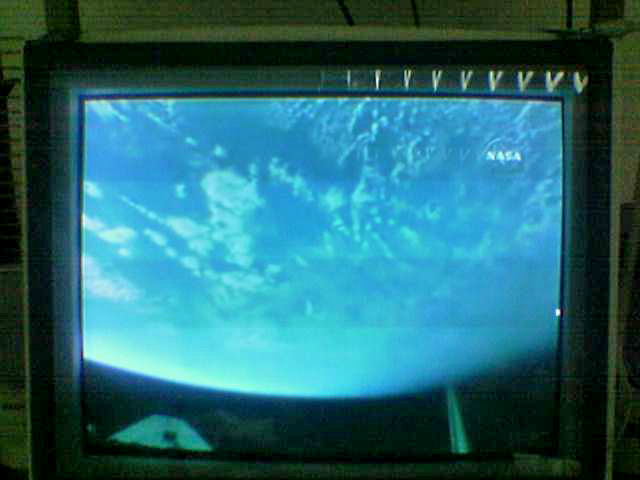
(Top photo: Blue Earth seen from the International Space-Station, courtesy of NASA TV; Photo above: UP Oblation in Baguio City looking up and reaching out to Heaven naked and innocent as Adam.)

Saturday, October 14, 2006

Typhoon Hysterics (Part 2)


A few more points to deal with regarding the recent “typhoon cleansing” we went through.

Until now, many people are confused as to which typhoon signal system is being utilized and enforced by PAG-ASA. Officially, it utilizes the Modified Public Storm Warning Signals with 4 Public Storm Warning Signals, as follows:

PSWS#1 – for winds from 30-60 kph expected in the next 36 hours. Twigs and branches of small trees may be broken. Some banana plants may be tilted or downed. Some houses of very light materials (nipa and cogon) may be partially unroofed.

PSWS#2 – winds from 60-100 kph in the next 24 hours. Some coconut trees may be tilted with few others broken. Few big trees may be uprooted. Many banana plants may be downed. Rice and corn may be adversely affected. Large number of nipa and cogon houses may be partially or totally unroofed. Some old galvanized iron roofings may be peeled off. In general, the winds may bring light to moderate damage to the exposed communities.

PSWS#3 – winds from 100-185 kph in 18 hours. Many coconut trees may be broken or destroyed. Almost all banana plants may be downed and a large number of trees may be uprooted. Rice and corn crops may suffer heavy losses. Majority of all nipa and cogon houses may be unroofed or destroyed and there may be considerable damage to structures of light to medium construction. There may be widespread disruption of electrical power and communication services. In general, moderate to heavy damage may be experienced, particularly in the agricultural and industrial sectors.

PSWS#4 – winds above 185 kph in 12 hours. Coconut plantation may suffer extensive damage. Many large trees may be uprooted. Rice and corn plantation may suffer severe losses. Most residential and institutional buildings of mixed construction may be severely damaged. Electrical power distribution and communication services may be severely disrupted. In the overall, damage to affected communities can be very heavy.

On the other hand, the internationally used Saffir-Simpson Scale for classifying typhoons or hurricanes, has the following categories:

Category 1 – Minimal, 119-153 kph. Some damage is expected, with most of it limited to shrubbery, unanchored houses and items. Some minor flooding will cause pier damage.

Category 2 -- Moderate, 154-177 kph. Considerable damage can be expected to shrubbery and some trees may be blown down; there will be damage to mobile homes, signs, roofs, windows and doors. Small craft may be torn from moorings and marinas will probably flood. Some low-lying areas and shoreline residences should be evacuated.

Category 3 -- Extensive, 178-209 kph. Large trees and most signs may be blown down; there may be structural damage to small buildings; mobile homes will be destroyed. Serious flooding will occur at the coast, with severe damage to shoreline structures and flooding up to eight miles (13 km) inland at elevations of five feet (1.5 m) or less.

Category 4 -- Extreme, 210-250 kph. Expect trees, signs and traffic lights to be blown down, and extensive damage done to roofs, windows and doors. Mobile homes will be completely destroyed. Beaches will be eroded and there will be flooding as far as 6 miles (9.5 km) inland for anything under 10 feet (3 m) above sea level. Anyone staying within 500 yards (457 m) of shore will be evacuated, as will all single-story residences within 2 miles (4 km) of shore.

Category 5 -- Catastrophic, 251+ kph. Trees, signs, traffic lights will be blown down.
There will be extensive damage to buildings and major damage to lower floors of structures less than 15 feet (4.5 m) above sea level within 500 yards (457 m) of shore. Massive evacuation of residential areas 5-10 miles (8-16 km) from shore will be required.

Comparing the two, it is obvious that Saffir-Simpson has a more precise system for having smaller wind-speed differentials between categories. Although more cumbersome with its 5 categories, it allows more accurate determination of effects on the human environment. Its major disadvantage is the absence of a category for wind speeds below 119 kph. It was obviously designed for highly developed countries with more durable infrastructure.

The PAG-ASA system is clearly designed to warn people in agricultural areas. Unfortunately, it does not provide a graphic warning for urban dwellers. In this Post-Milenyo era, we hope this can be amended. Example: Oversized and medium-sized billboards toppling over vehicles and across major roads. (Sorry, can’t resist that one.)

Furthermore, using the two systems to analyze the average wind speed of Milenyo, it seems clear that typhoon Milenyo had sustained wind velocities of no less than 150 kph and not the reported 120 or 130 kph. In short, Milenyo was both a PSWS#3 and, at least, a Category 2 typhoon. Comparing it with Typhoon Trining (Ruth) which hit Northern Luzon in 1991 (204 kph winds), I can objectively say Milenyo almost came up to Trining's fierceness, but not quiet. Hundred-year-old pine and cypress trees in Burnham Park were uprooted then just like many not-so-old acacia trees in Makati and Taguig recently, although many of the old ones had only large branches twisted and torn off the trunk. The average speed of at least 165 kph estimated and reported by US meteorologists is a more acceptable one. Add a very conservative gustiness of 10% and you have maximum speeds of about 180 kph (Category 3)! Enough to uproot a large tree especially in the open field.

(This gustiness thing is one particularly intriguing phenomenon. My friend and I noticed a portion of the metal-sheet ceiling underneath LRT 1 in Avenida twisted out of place. He said, thieves did it. I noticed though that that small portion happened to be right along a thru-street (Raon, I think). The wind had accelerated through the buildings along that alley and produced a negative pressure within the ceiling, sucking it out of connection and exposing the electrical wires. That’s exactly how some well-attached roofs are sucked out. The lesson? Wind speed can be positive and negative. It may push or pull out.)

Justifying its system of averaging expected wind velocities over a shorter period, v.v. the longer period used by other countries, PAG-ASA’s final lower average has resulted in underestimating the speeds and the effects of Milenyo. A careless error if I may say so. In such cases, a “worse”-case scenario is better. That is, erring on the side of caution is much better when lives and properties are at stake. However, it is not that way with people used to disasters; either they tend to take an idle optimistic view or a fatal fatalistic one. We’ll make it through somehow! Or, what can we do?

Finally, cleansing works for our own good. It takes away the weak branch or tree that has failed to give fruit or serve its purpose except as firewood or fertilizer. It takes away old ways that will and can no longer work to improve our way of doing things. Funny how many people fight to retain such failed ways by undoing the works and the lessons nature and God hand us.

Cleansing, like fasting and praying, takes away the poison within us and around us. We don’t just suffer a typhoon, a disaster or even a war (God forbid). We don’t become less from a painful catharsis. We become what we should be. The world becomes what we could make of it. Society becomes a home people by cleansed – no, purified and refreshed – people.

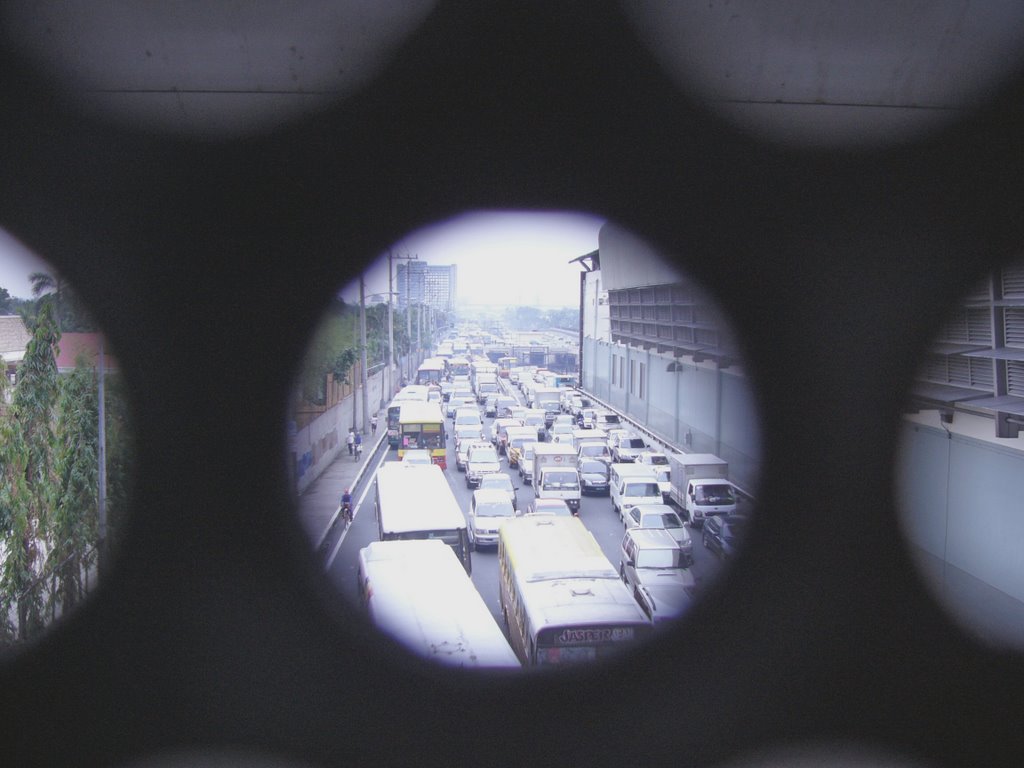
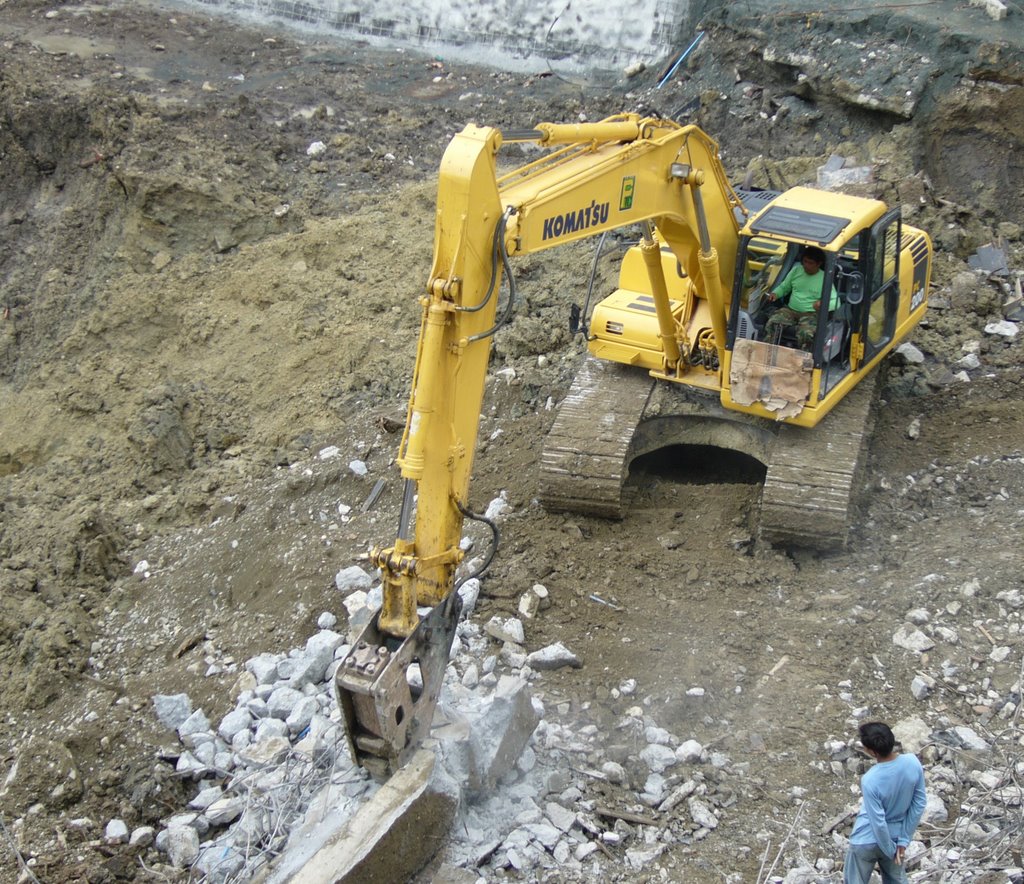
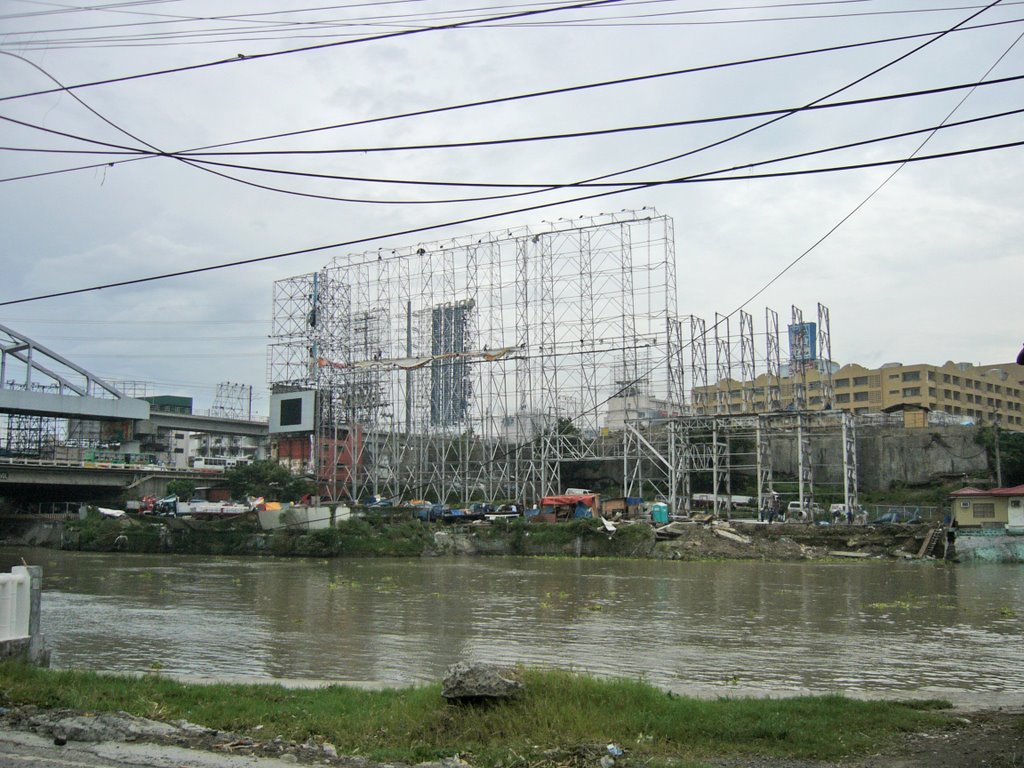
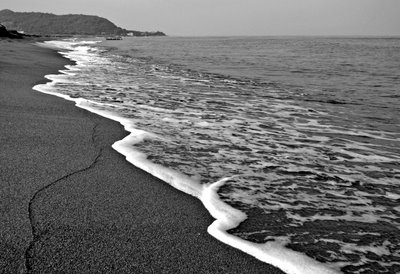
(Top Photo: Traffic along EDSA as seen from the Ayala MRT Station. Photo Above: At a construction site in Makati, a pheumatic hammer breaks down the old to build up the new.)

Friday, October 06, 2006

Typhoon Hysterics

Many typhoon-battered Filipinos still react to the latest typhoon as if it were the end of the world or, at least, the very undoing of their country and their lives. Consider the following cases:

  1. Electricity

The first thing that usually goes out when Signal No. 3 hits is power. And together with sanity also goes, for some, water, phone lines and other power-dependent services, like the Internet and radio. Some people curse the black-out then proceed to the nearest mall. Some decry the feeling of living in the Stone Age as if it was electricity that gave humans intelligence.

Not much we can do when our power lines are overhead instead of being underground or embedded on ground-level structures. Yes, it’s an engineering issue but don’t we have enough engineers now to make us decide the best options? Even if one never studied engineering, it still makes one grunt in frustration at knowing politicians have more control over infrastructure projects and “countryside development” than engineers do.

  1. Water

Water, the essential element, is also one very ironic thing. With so much of it coming down from heaven, we panic that we have no mineral water to drink. Water, water everywhere but not many wise persons around! While it refreshes the land, water also causes fear when cyclones blow. Again another source of engineering problem that should have been addressed many years ago with wider and more efficient canal systems but because of lack of vision, we all suffer unnecessary floods. Of course, up in the mountains and in the forests, the issue is that of gravity and saturation capacity of the soil. But it is also an issue involving human dominion. Much of the destruction that nature inflicts upon us is merely a result of human abuse and negligence. Let’s stop whining for our own errors. We all deserve it!

  1. Billboards

How many times have people warned against this menace of the landscape? How many times have we heard ordinary people and artists decry the desecration of the environment with this modern invasion of the senses and the sensibilities? Will we have to go to court to decide if we can allow them to rake in money and endanger – no, kill – more lives? Enough! Away with those free-standing billboards! You hear the cry in a loud unison but one wonders if someone hears at all.

We shout against billboards when we could have avoided all the trouble if we only had the sense to see through the maze that blocks our vision to clarity.

  1. Fallen trees

Trees will fall and branches will break as surely as the wind blows. (I personally don't believe Typhoon Milenyo only had 130kph winds to topple those many trees and billboards. But more on that in the next post.) So why plant them where they can do damage – right beside power lines or next to a house? There must be a sensible way of avoiding danger before it happens. If you plant a tall tree alongside a road, chances are it will fall on it. Or if you build a road where a tall tree is, somehow, it will fall and block, if not, crush a vehicle. How tall is a tree anyway? Can we not give enough space for it to fall upon without doing much damage? In the howling wind, I think that I shall never see a problem as deadly as a tree.

  1. Typhoon Warnings

Alright, PAG-ASA may have put out typhoon bulletins on the radio and TV but isn’t it presumptuous to expect people, who wake up one morning and seeing only rain, not to venture out? The fact that many people were caught out there in the offices during the height of the typhoon means our typhoon signals are nothing but bulletins and not really effective signals like the sirens or tambulis (horns) used in the past. Filipinos, in general, respond more to a warning sound than to sound bites. Sounds alarming? It better be; it's your life at stake.


With almost everyone having cell-phones, why can’t the government and the telecommunication giants come out with a system that will warn people of an impending cyclone, tsunami, landslide or earthquake? Anyone would be willing to pay P1 for such a service 4 or 5 times a year. What is P5 if it will save a life?


I say, much of our hysterical reactions are out of place. No, I do not mean our grief and pain, or our fears and our valid concerns. But if we do what is in keeping with common sense and plain wisdom, we have no reason to suffer, to panic or to worry when disasters strike.

But there is another side of typhoons that we fail to see which, if we did, would not leave us feeling so helpless. Here are a few of what we do not appreciate:

  1. Clean air

Typhoons give us a breath of clean, cool air for a day or two in the polluted metropolis and other urban areas. Instead of shouting, breathe in deeply and enjoy this rare blessing from heaven.

  1. Silence

Hear the silence of the night when no karaoke, TV, radio or car engines dare invade the eye-of-the-storm peace that comes after the typhoon. It brings back those childhood days in the provinces when only the cicadas and the creaking bamboos ruffled the night.

  1. Humility

City life usually brings pride to its denizens. Having lived in Baguio for 12 years, coming back down in Metro Manila was a humbling experience. I couldn’t recognize new buildings and got lost in the maze of flyovers and underpasses. People of course “knew” their way around and in fact felt they belonged to the city. I did not. Typhoons do that to us. We feel lost in the silence and the darkness. But others just don’t get it. They would rather whine and complain that they should suffer such a curse. Try humility; it is the first step toward real wisdom and strong character.

  1. Open space (no billboards)

    As we said, be thankful, we can see the skies once more, if we try hard enough to peer through the naked billboard trusses. It may seem like a cruel thought; but a fallen billboard is nature’s way of reclaiming its supremacy over decency.

  2. Swelled Clean Rivers


Feel the surge of full and cleaner rivers flowing by and be revitalized. But city-dwellers miss this opportunity. Once power comes back, they go back to watching TV and singing karaoke. But right in the city is nature putting out a show we fail to appreciate and give thanks for. We don’t even take time to watch Pasig flow lazily by anymore; unlike in Rizal’s time when they spent afternoons beside her pristine banks. Why should we? And smell her normally putrid waters?

  1. Less traffic

Who drives during a typhoon? Who else but the people in media, in government or in business. And those caught unaware in the storm. The streets should be no-man’s-land during such times. But it goes back to what we said above: how should people know? Nevertheless, it helps nature clean the air faster.

  1. Time to think

Thinking triggers new energy. It leads us to make amends for our errors and omissions. Storms give us time to think, if not of personal matters, at least of ways to improve our way of dealing with our environment and our manners. It is not too much to expect some good coming out of seemingly bad things.


Finally, Filipinos are wont to say that typhoons and other disasters are God’s way of telling us we should change. We all welcome that. But we tend to look at typhoons in the same way we look at Lent, Christmas or New Year. We rejoice at being given another chance to do it right this time, a chance to be better people and a chance to make it happen for our country. This makes the Philippines the most hopeful country perhaps in the entire globe. But, too much hope without enough progress becomes a tiring farce. We have been hoping since the time of the Spaniards. Rizal’s final poem still echoes our national pathos: “Adios Patria adorada! Region del sol querida; Perla del mar de Oriente, nuestro perdido Eden!


Today, we live in a virtual Paradise but still behave likes slaves and victims. After each storm, we all feel like Adam and Eve just out of the Garden -- heads bowed down, eyes on the dirt and debris, pride shattered and pockets even more empty. What we forget is that if we turned around, we would see that the way is wide open for us back to those loving divine hands. Back to where abundant life reigns. Alas, we would rather live East of Eden!